- Home
- travel
- Seven new high-speed rail corridors will make India fully atmanirbhar in bullet train technology: Ashwini Vaishnaw
Seven new high-speed rail corridors will make India fully atmanirbhar in bullet train technology: Ashwini Vaishnaw
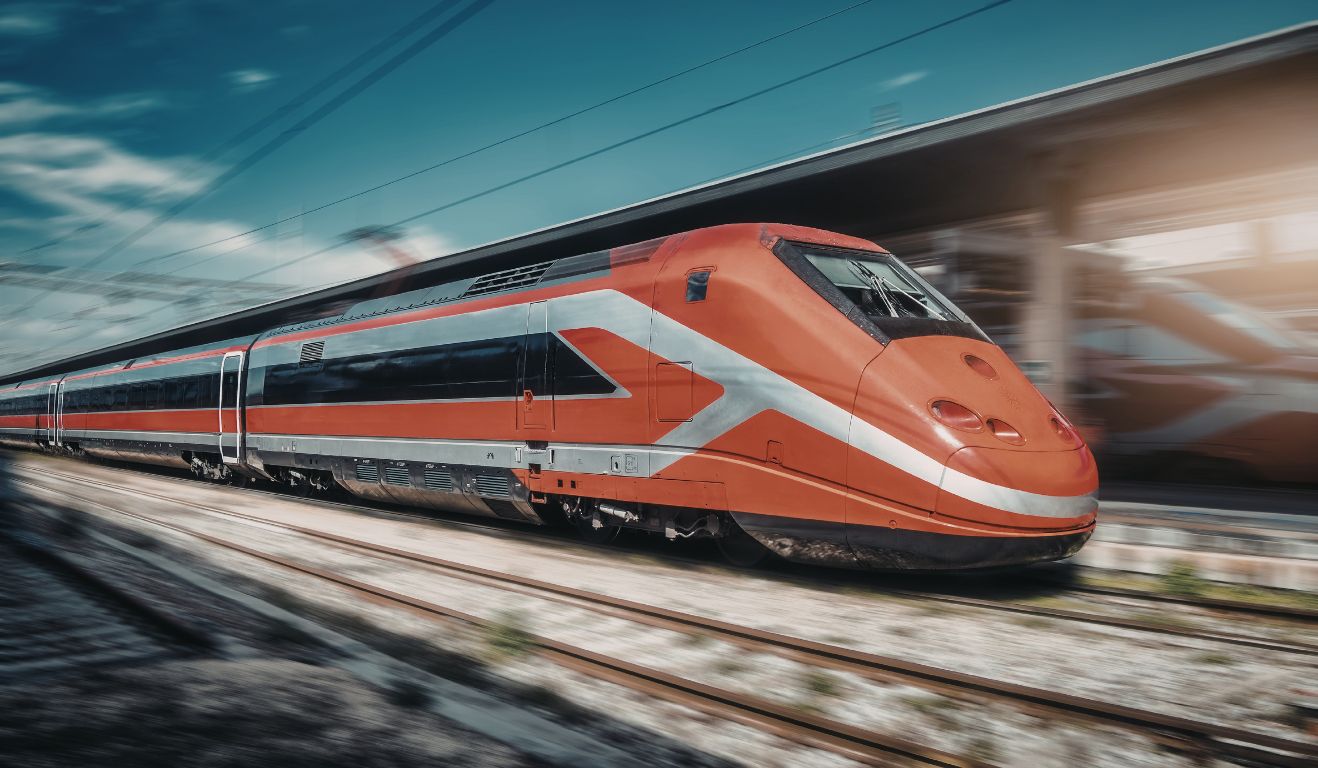
Union Minister for Railways Ashwini Vaishnaw said India is on course to become fully self-reliant in bullet train manufacturing and high-speed rail technology, with indigenous systems set to power seven new corridors announced in the latest Union Budget.
In an interview with The Indian Express, Vaishnaw said the new high-speed rail projects will rely on Indian-designed construction technologies, signalling, stations, overhead electrification and, in the future, domestically manufactured bullet train sets.
“With these seven corridors, India will be 100% atmanirbhar in making bullet trains,” the minister said, noting that while the first project the Mumbai–Ahmedabad High-Speed Rail was developed with Japanese collaboration, India has since absorbed critical expertise and is ready to execute future corridors largely on its own.
Seven ‘Growth-Connector’ corridors
The government has identified seven new high-speed rail corridors as “Growth-Connectors”: Mumbai–Pune, Pune–Hyderabad, Hyderabad–Bengaluru, Hyderabad–Chennai, Chennai–Bengaluru, Delhi–Varanasi and Varanasi–Siliguri. Together, these routes will span about 4,000 km and involve an estimated investment of ₹16 lakh crore.
Vaishnaw said the selection of corridors was driven by economic linkages. “Hyderabad, Chennai and Bengaluru form a high-speed triangle of major economic centres. Connecting them will trigger new development along these corridors,” he said, drawing parallels with Japan’s Tokyo–Osaka Shinkansen corridor, which catalysed growth across multiple cities.
The western corridor will eventually link Ahmedabad, Mumbai, Pune, Hyderabad and Chennai, while the northern stretch will connect Delhi, Varanasi, Patna and Siliguri, creating a nationwide high-speed rail spine.
Indigenous tech, future train manufacturing
For the new corridors, India plans to deploy home-grown construction techniques for tracks, slabs, viaducts, pillars and foundations, alongside domestically developed overhead electrification, advanced stations and signalling systems. Vaishnaw said bullet train sets themselves will be manufactured in India in the future, marking a shift from technology transfer to indigenous production.
“The learning curve from the first project has been steep, but we have now understood the complexities of high-speed rail,” he said.
What makes bullet trains different
Vaishnaw outlined three core engineering challenges unique to high-speed rail: precision wheel–track interaction at speeds above 300 kmph; pantograph design to ensure stable power collection at very high speeds; and aerodynamic, airtight train design to manage pressure changes and vacuum effects during operation.
“These are highly complex systems, and Indian Railways has fully understood them,” he said.
Financing and challenges
Detailed Project Reports (DPRs) for the new corridors are under preparation, and financing structures are still being finalised. The minister acknowledged land acquisition as a key challenge, urging state governments to extend support. “People deserve and desire this kind of fast, modern connectivity,” he said.
If executed as planned, the next phase of high-speed rail could mark a turning point for India’s transport infrastructure both in terms of connectivity and the country’s ambition to build world-class rail technology at home.