- Home
- travel
- Railways to Introduce Non-Vegetarian Meals on Howrah–Guwahati Vande Bharat Sleeper Express
Railways to Introduce Non-Vegetarian Meals on Howrah–Guwahati Vande Bharat Sleeper Express
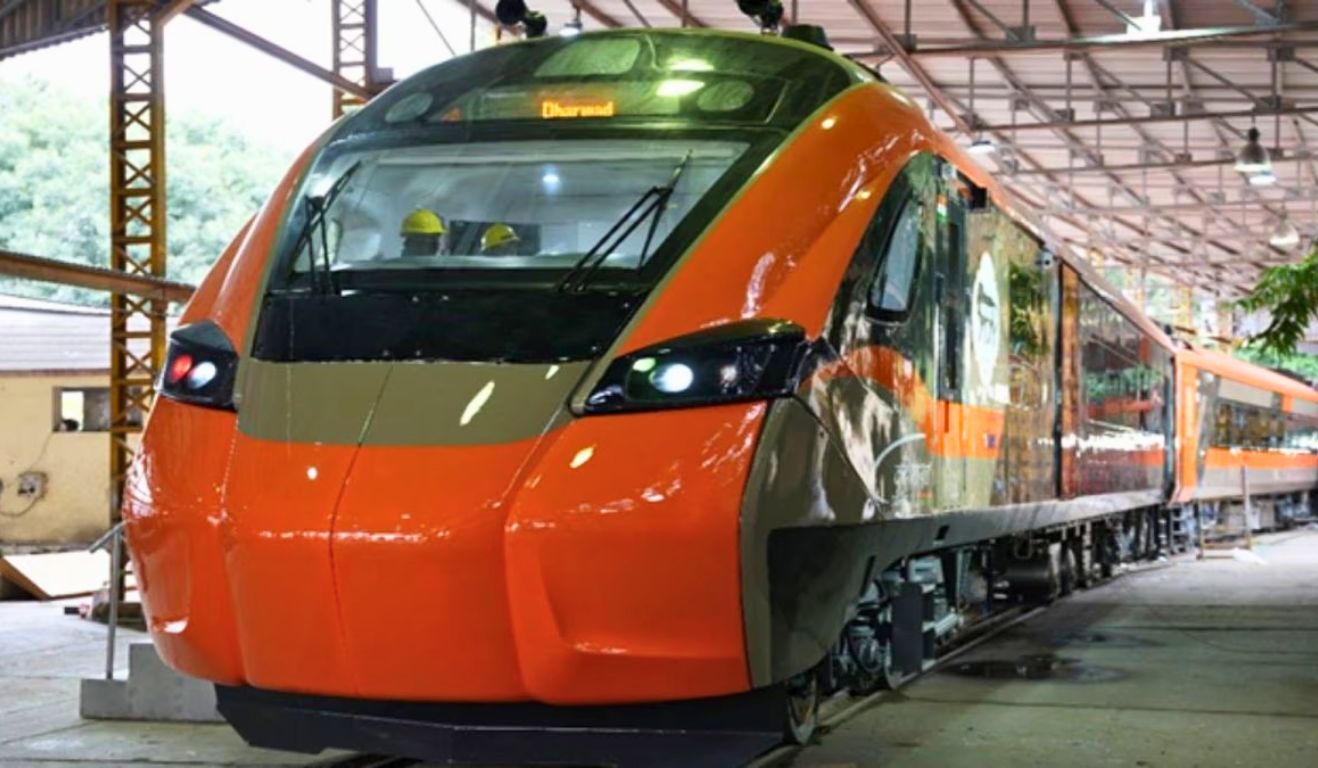
Indian Railways has decided to introduce non-vegetarian meal options on the newly launched Howrah–Guwahati (Kamakhya) Vande Bharat Sleeper Express, ending a brief but politically charged controversy over its earlier vegetarian-only food policy.
The sleeper service was inaugurated by Narendra Modi on January 17 and was positioned as a flagship rail link between West Bengal and Assam. However, the initial decision to serve only vegetarian food drew sharp criticism in Bengal, particularly in the run-up to the Assembly elections.
Ministerial Intervention Prompts Change
Union Minister of State Sukanta Majumdar said he raised the issue directly with Railway Minister Ashwini Vaishnaw, following public backlash.
“I spoke to Ashwini Vaishnawji on Sunday and requested him to introduce non-veg food choices on the Vande Bharat Sleeper Express,” Majumdar said on Monday. “He assured me that non-vegetarian food will be made available soon. A notification will be issued within two or three days.”
Sources said the revised menu would include non-vegetarian items such as chicken, though it remains unclear whether fish central to Bengali cuisine will be offered on board.
Political Row Ahead of Elections
The controversy had escalated after the All India Trinamool Congress accused the BJP-led Centre of imposing dietary preferences and disregarding Bengali food culture. Trinamool’s social media platforms described the vegetarian-only policy as an “attack on Bengali identity”.
The issue gained further traction because both Bengal and Assam have deeply rooted non-vegetarian culinary traditions, with fish and meat forming daily staples. There is also no religious restriction on consuming non-vegetarian food at either Kali temples in Kolkata or the Kamakhya Temple, which is among the most prominent Shakti shrines in the country.
BJP Leaders Echo Demand
Amid growing political pressure, Bengal BJP leaders themselves publicly supported the demand. State BJP president Samik Bhattacharya said opposing the demand made little sense.
“A train that departs from Bengal and assumes Bengalis will not eat fish that cannot happen. This is a logical and reasonable demand,” Bhattacharya said.
A BJP source said while chicken would “certainly” be included, serving fish on all Vande Bharat services may pose logistical challenges.
Trinamool Remains Sceptical
Despite the railways’ decision, Trinamool leaders played down the announcement, alleging the move was politically motivated.
“They finally decided to introduce non-vegetarian meals with the elections in mind,” Trinamool spokesperson Arup Chakraborty said. “Once the elections are over, they will again try to attack Bengalis’ food habits and culture.”
Religious Route, Cultural Sensitivities
Railway sources said the original vegetarian-only policy stemmed from an internal practice of serving vegetarian food on routes connecting major religious centres. The Howrah–Guwahati Vande Bharat was projected as a pilgrimage corridor linking Kali temples in Kolkata such as Kalighat and Dakshineswar with Kamakhya in Assam.
During the inauguration, Prime Minister Modi had highlighted the train’s role in enabling devotees from Bengal and Assam to visit each other’s sacred sites with ease.
However, with no religious prohibition on non-vegetarian food at these temples, the policy was widely seen as culturally misaligned prompting the eventual reversal.
With the menu change now imminent, the episode underscores how food choices on public transport can quickly become a flashpoint in India’s politically and culturally sensitive landscape.