- Home
- Technology
- AI Hype Overdone, Job Loss Fears Exaggerated: NR Narayana Murthy and Aditya Puri Offer Reality Check
AI Hype Overdone, Job Loss Fears Exaggerated: NR Narayana Murthy and Aditya Puri Offer Reality Check
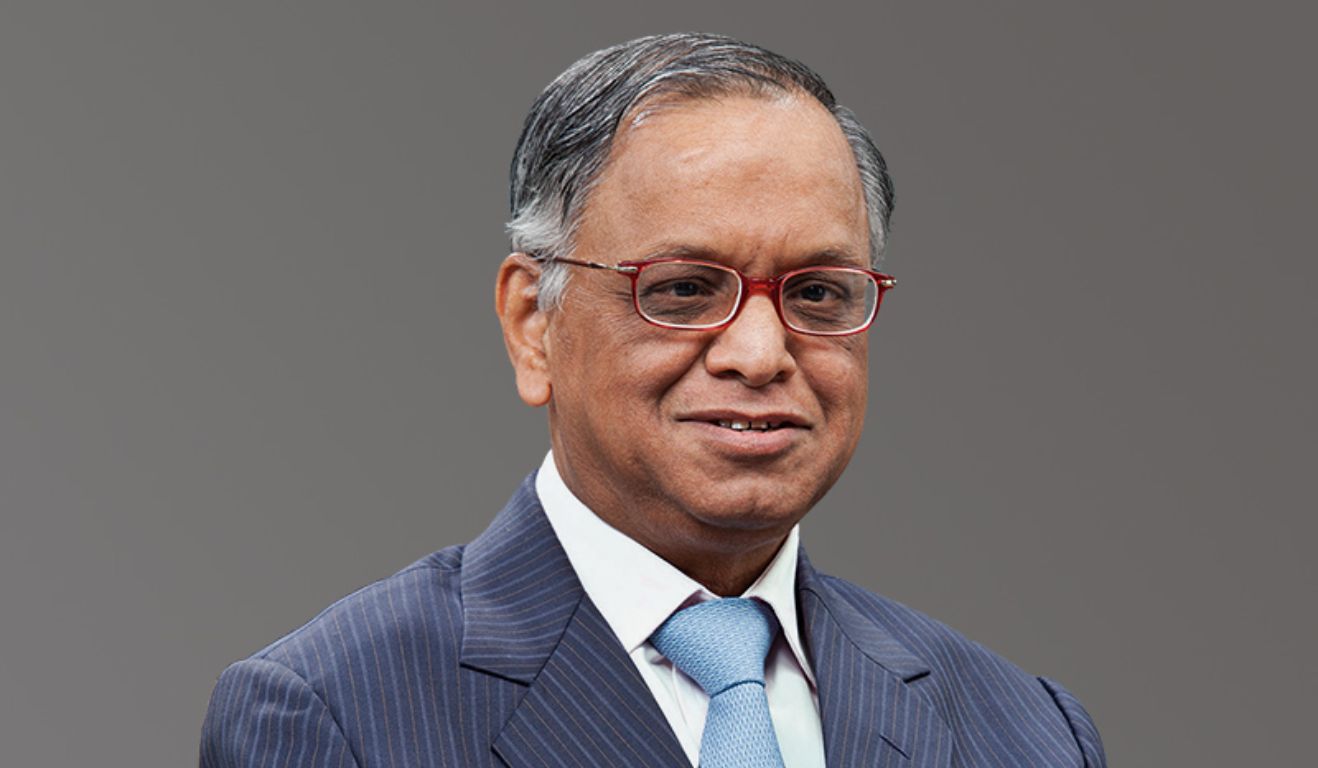
Artificial intelligence may dominate boardroom conversations and investor pitches, but fears of massive white-collar job losses are overblown, according to industry veterans N. R. Narayana Murthy and Aditya Puri.
In a rare joint interview at the Indian Institute of Management Bangalore with Moneycontrol, the founders reflected on entrepreneurship, corporate governance, AI disruption and the state of India’s financial system offering a measured counterpoint to the prevailing hype.
“Too Much Hype” Around AI
Puri, the former chief executive of HDFC Bank and now an adviser to The Carlyle Group, said both expectations and fears surrounding AI have been inflated.
“There is too much hype about AI and what it can do and how quickly it can do it,” Puri said. “Correspondingly, there is too much negativity in terms of how many jobs will be lost.”
While acknowledging that some roles may disappear, he dismissed projections of sweeping white-collar displacement. “If you say 60% of jobs will be replaced, that doesn’t mean there will be 60% job losses. Nothing like that happens.”
Murthy, founder of Infosys and Catamaran Ventures, echoed that sentiment, drawing from his own experience using generative AI tools.
“My experiments have shown that a smarter mind will get better quality and productivity from these assistive technologies,” he said. “There is no need for youngsters to get worried.”
According to Murthy, the key is adaptation. “The world will not end for the smart and the hardworking,” he added, urging young professionals to master AI tools rather than fear them.
Profitability Over Vanity Metrics
Beyond AI, the two business leaders emphasized foundational principles for entrepreneurs particularly at a time when Indian startups are witnessing a surge in IPOs.
Puri cautioned against focusing solely on topline growth while ignoring profitability. “If you don’t have bottom line, it doesn’t work,” he said bluntly.
He was equally critical of creative accounting practices. “Adjusted EBITDA? Who are you fooling? Either you have unit profit or you don’t.”
Unit-level profitability, he argued, is the clearest path to sustainable growth. “The purpose of business is to have profit, create employment, grow and be fair.”
Murthy reinforced the need for “deferred gratification” the discipline to sacrifice short-term gains for long-term value creation. Entrepreneurs, he said, must control costs and build profitability before seeking liquidity or rapid public listings.
Unless founders embrace that mindset, “investor confidence in them will not be very high,” Murthy noted.
AI in Banking: Evolution, Not Revolution
On whether AI could radically reshape financial services, Puri offered a cautious view.
AI will certainly influence marketing, credit assessment, fraud detection and back-end processes, he said. But the transformation will be gradual rather than immediate.
“It will change certain processes. Some is already happening. But all this will happen slowly,” he added.
Addressing concerns about deposit growth in India’s banking system, Puri dismissed fears that money is shifting en masse to equities and mutual funds.
“Only 6% of India’s population invests in the stock market,” he pointed out. Banking, he said, remains underpenetrated, particularly in semi-urban and rural areas offering ample room for expansion.
Leadership and Legacy
In a personal tribute, Murthy described Puri as “India’s finest entrepreneur post-independence,” citing his resilience and commitment to principles in a challenging regulatory and business environment.
“He has the ability to stand up for his principles and resist pressure,” Murthy said.
A Measured View in an Age of Extremes
At a time when AI is often portrayed as either a miracle cure or an existential threat, the two industry veterans struck a more pragmatic tone: technology will evolve, some jobs will shift, but human intelligence and discipline will remain central.
For India’s young entrepreneurs and engineers, their message was clear build for the long term, focus on fundamentals, and treat AI as an enabler, not a replacement.